


The Growing Reality of Caregivers at Work
Today, more Americans than ever are balancing caregiving with their jobs. There are 130 million caregivers in the U.S., and the share of adults who both provide care and work outside the home continues to grow.
The cost of this balancing act is steep. Nearly one in three caregivers has left a job due to caregiving responsibilities, and two-thirds say they struggle to make it all work. Employers bear the impact too, with an estimated $33 billion each year in lost productivity and retention.
Yet when caregivers are supported, the benefits are equally tangible. A Harvard Business School study found that employers offering caregiving supports saw absenteeism drop by up to 50% and achieved returns on investment as high as 72%.
The business case is clear. The question is: how should employers respond?
Understanding Before Acting
Too often, companies jump to solutions without first understanding who their caregivers are or what they actually need. How many employees are caring for children, aging parents, other dependent adults, or a combination of these? What are the actual challenges that these employees are facing in trying to balance it all?
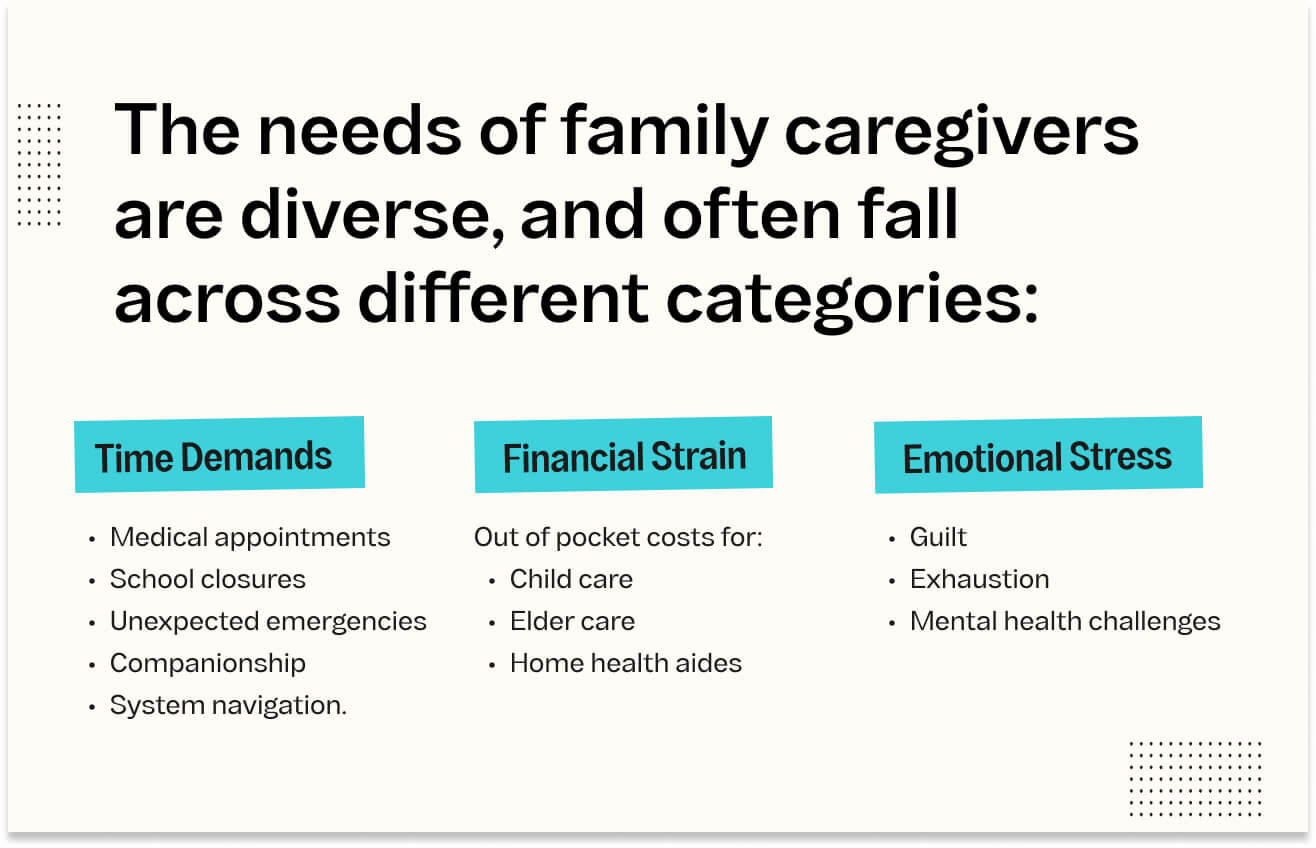
Caregiver representation across workforces can vary. For example, a professional services firm with largely mid-career professionals may have a preponderance of eldercare needs, where flexibility, navigation support, and adult backup care are most valued. Conversely, a large retail chain whose workforce skews younger and more female may require more child care support around reliable care coverage and predictable scheduling.
The impulse to act is great, but without first identifying who the caregivers are and asking what they need, resources risk being underutilized or irrelevant.
An Insights-Driven Approach to Caregiver Support
To build a caregiver support plan that actually works for workers, employers should adopt a listen, analyze, act cycle:

Survey or hold focus groups with employees who are caregivers. Solicit input from your Parents’ ERG or Caregivers ERG, if you have these Employee Resource Groups. Ask about time pressures, financial burdens, emotional health, and logistical challenges.

Look at the data for patterns. Are employees struggling most with child care coverage? Are they caring for loved ones with a disability? Or navigating Medicare for aging parents? Different groups may have different needs.

Design policies, build norms, and source benefits that are aligned with what the data reveals. For example:
- Policies can offer more options around flexible scheduling, remote work options, or paid family leave
- Norms that better support workplace culture for caregivers can be shaped via support from peer communities or employee resource groups (ERGs)
- Benefits can offer targeted support in the form of subsidies or stipends for care, information sharing tools, backup care services, or care navigation access. Sparrow, as an end-to-end leave management platform that streamlines leave processes for employers, removes complexity for caregivers and ensures they feel taken care of during the leave experience.
As an example, Bank of America used their annual employee engagement surveys and benefit usage data to understand how many caregivers they had and what support they valued. Based on that, they rolled out a suite of eldercare supports: emergency backup care for adults, senior care assessments via care managers (in-home or post-hospital), and legal consultations (e.g. for wills, power of attorney) for eldercare planning. The company continues to refine their offerings based on feedback and the evolving needs of their caregiving workforce.
A Portfolio of Low-Touch to High-Touch Options
Many employers can feel paralyzed by the belief that supporting caregivers requires large investments right away. In reality, they don’t need to choose between all-or-nothing approaches, and many organizations start small and scale over time. A range of potential options include:

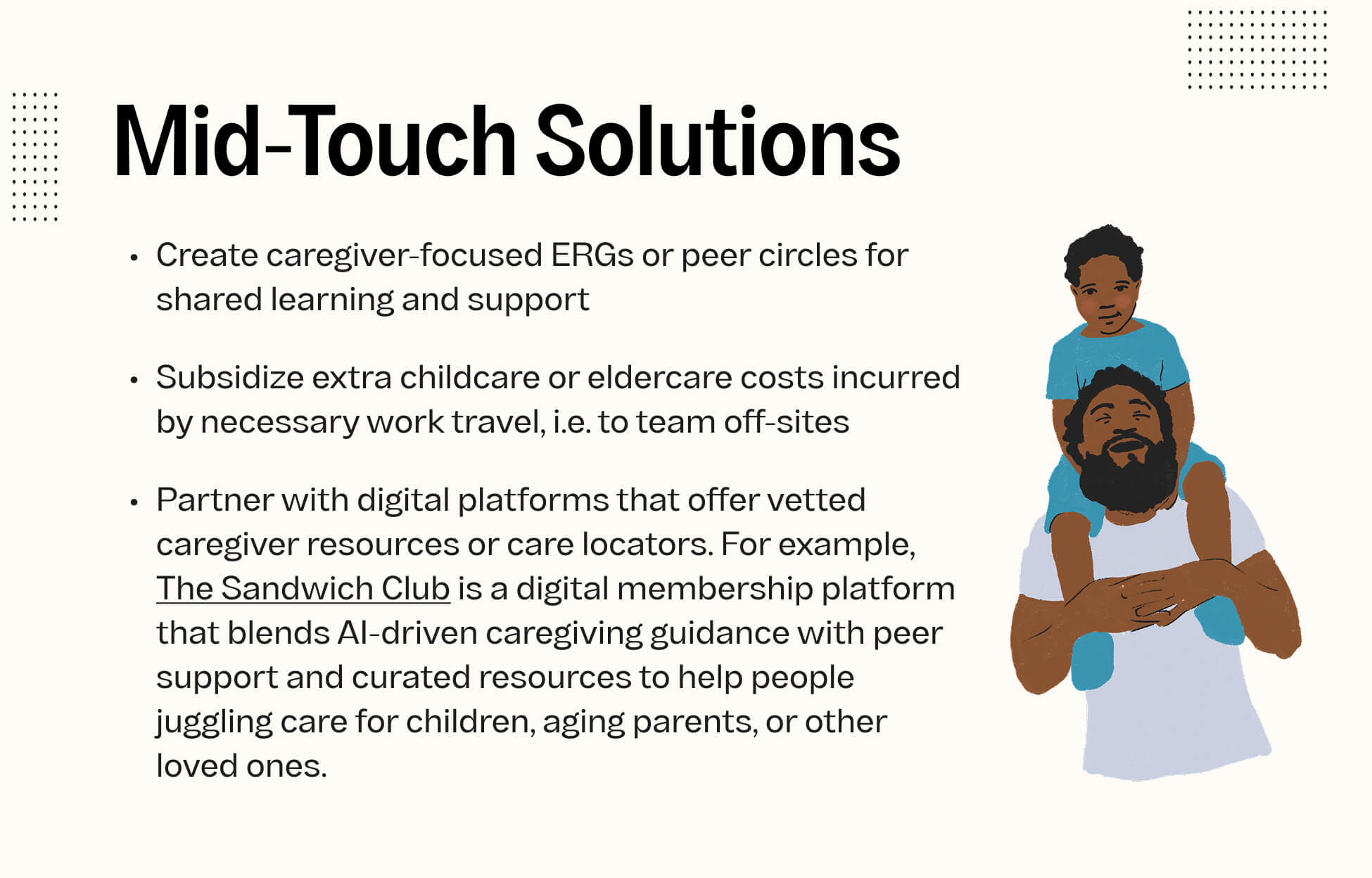
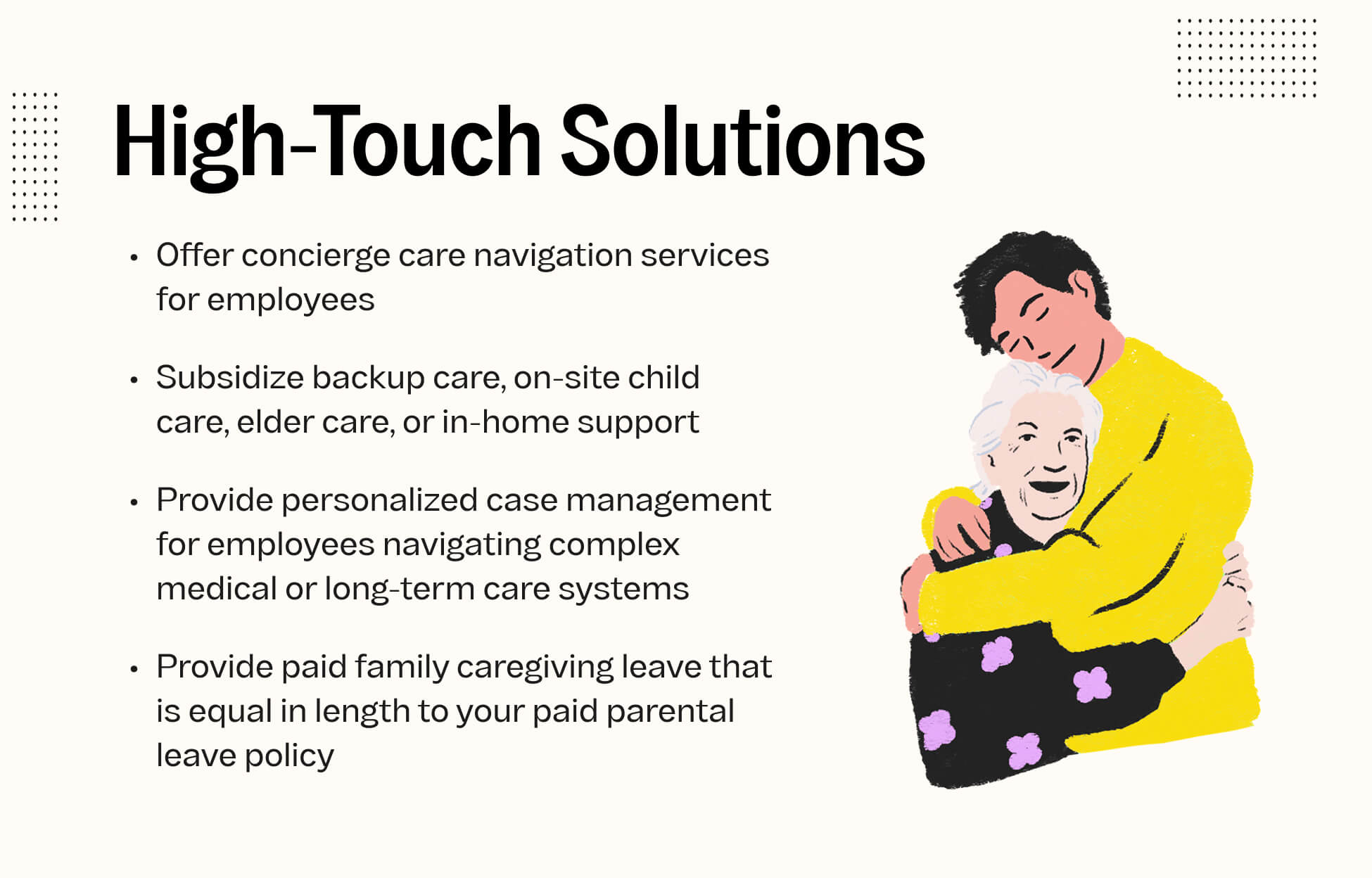
This spectrum allows employers to start where they are, while building toward more robust support over time. For example, P&G’s Gillette brand rolled out a backup child care benefit to their employees, and then later expanded that benefit to include backup care for adults as well based on feedback and input from employees.
About The Sandwich Club
The Sandwich Club is a modern, digital resource hub for caregivers, built for the real challenges of caregiving. They help members make decisions with confidence through expert guides and recommendations, checklists and tools, and advice from other caregivers.
How Sparrow Supports Caregivers
Sparrow is the leading leave management solution helping modern employers to care for their people through life’s most meaningful moments. From welcoming a new child to caring for an aging parent, these experiences often define both personal and professional life. Employers like Reddit, Riot Games, and Chime, rely on Sparrow to navigate the complexity of leave with accuracy and care, reducing compliance risks, enhancing the employee experience, and containing costs. As of 2025, Sparrow has supported over four million days of employee leave and helped customers save over $400 million in payroll costs. With a bird’s-eye view across hundreds of HR teams and nearly one million leave experiences, Sparrow offers unique insight into how caregiving and other major life events are reshaping the modern workplace.
Conclusion
Employers who take time to understand the wide range of caregiver needs before throwing resources at the problem position themselves as true partners in their employees’ lives. The payoff is clear: stronger retention, higher productivity, and greater loyalty. As caregiving becomes an ever more common part of modern life, the future of work will depend on how effectively companies recognize and respond to this growing reality.